The Cocaine Cowboys Era
Between 1976 and 1986, Miami became the central US distribution point for the entire global cocaine trade. The Medellín Cartel — led by Pablo Escobar, the Ochoa brothers, Carlos Lehder, and José Rodríguez Gacha — moved an estimated 80% of all cocaine entering the United States through south Florida. At the peak in the early 1980s, the Miami metro area was processing roughly $5 billion in cocaine revenue annually, with associated violence so severe that the Dade County Medical Examiner had to rent a refrigerated truck to handle the homicide overflow.
The economic effects were so dramatic that the Federal Reserve's Miami branch had a "cash surplus" — more dollars coming in than the rest of the entire Federal Reserve system combined. The construction boom on Brickell Avenue in the early 1980s was funded almost entirely by money-laundering operations connected to the cartel.
This era is documented exhaustively in Billy Corben's 2006 documentary Cocaine Cowboys, which has become essential viewing for anyone trying to understand modern Miami. The Miami of GTA: Vice City (2002) was a loving recreation of this exact period.
The Dadeland Mall Shootout
The defining moment of the Cocaine Cowboys era was the Dadeland Mall shootout on July 11, 1979. Two members of Griselda Blanco's organization — the "Cocaine Godmother" of Miami — entered a liquor store at Dadeland Mall in Kendall, Florida, armed with a MAC-10 submachine gun, and killed Colombian cartel rivals Germán Jiménez Panesso and Juan Carlos Hernández in broad daylight in a crowded shopping mall.
The killers escaped in a "war wagon" — a custom-armored truck with gun ports and bullet-proof glass — which became the symbol of the era. The shootout, which left two civilians wounded and bystanders fleeing into stores, ended the cultural fiction that Miami's cartel violence was confined to specific neighborhoods. It also triggered a federal response that would define US drug enforcement for the next four decades.
This is the historical event that, more than any other, shaped the visual and narrative DNA of every GTA-style Miami fiction that has followed.
Ambrosia in GTA 6
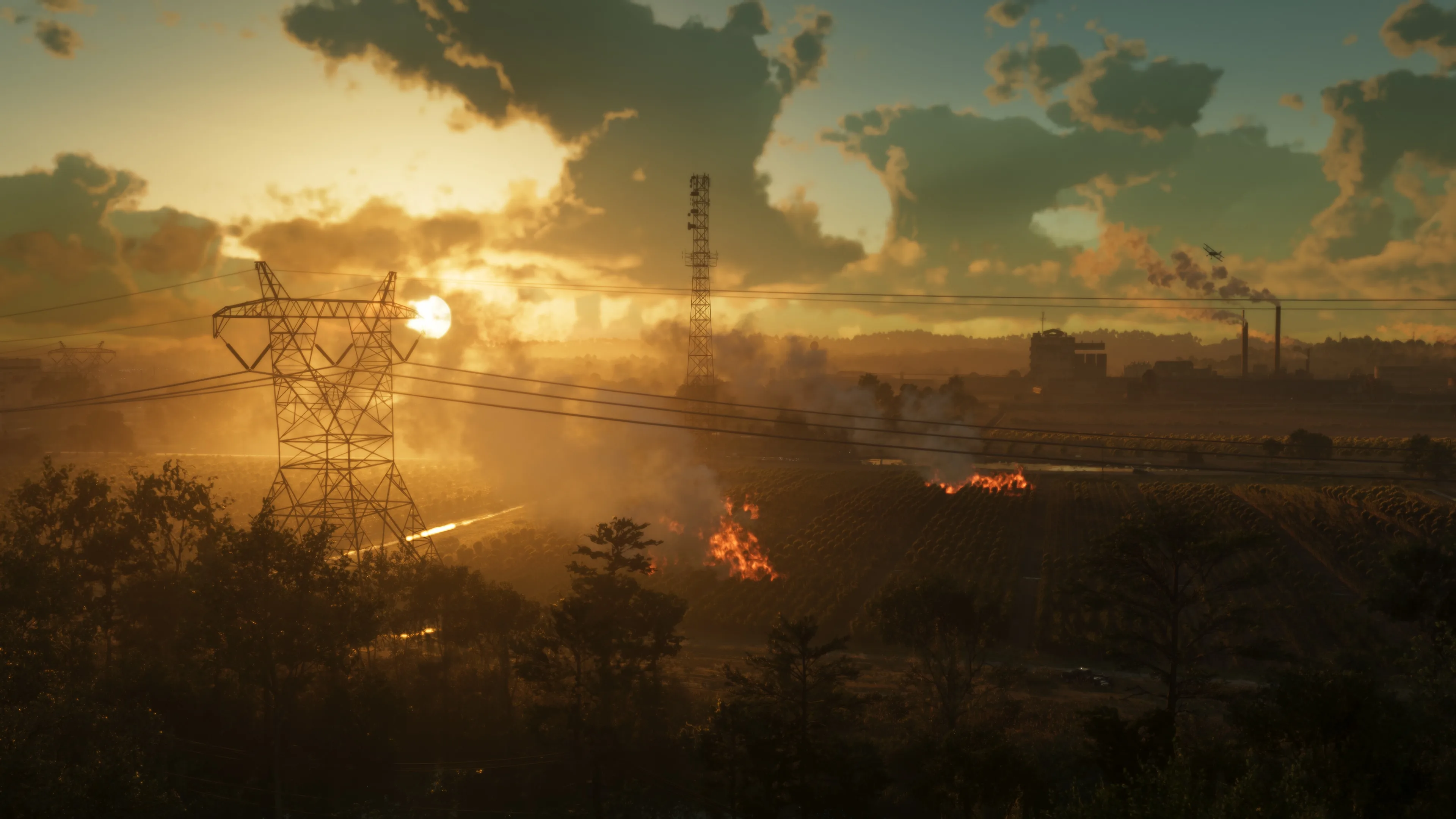
Ambrosia is Rockstar's name for what appears to be GTA 6's industrial heart — a region within Leonida that the official press kit describes as a place where "old school values still reign supreme," with a sugar refinery and biker-gang presence. The visual aesthetic is gritty, working-class, mid-century industrial — concrete, rust, faded paint, the kind of architecture that doesn't exist in Vice Beach's pastel zone.
Translated to Florida's actual geography, Ambrosia maps best to inland industrial Florida — Hialeah, parts of Hialeah Gardens, the warehouse districts of Doral, and the agricultural-industrial belt running from Florida City through the citrus and sugar zones to Belle Glade. These are the places where the legitimate Florida economy meets the underground Florida economy. Trucks come in legitimately. Trucks leave with cargo nobody checks.
The biker-gang presence Rockstar has hinted at strongly suggests Ambrosia will host a major chunk of GTA 6's organized-crime missions. Outlaw motorcycle clubs (OMCs) like the Outlaws MC, Pagans MC, and Mongols have all maintained significant Florida operations, particularly involving methamphetamine distribution and weapons trafficking in the modern era.
Modern Trafficking Routes
The 1980s cocaine era is over but trafficking infrastructure persists. Modern Florida drug trade focuses on heroin and fentanyl distribution (Atlantic seaboard routes), methamphetamine (Texas-to-Florida overland), prescription pill mills (peaked 2008-2012, now significantly reduced after legal crackdowns), and synthetic cannabinoids. The Port of Miami is the largest seaport on the US East Coast and remains a major point of customs interception.
Ambrosia's industrial setting in GTA 6 reads more as a modern trafficking corridor than as an 80s cocaine fantasy. The biker-gang presence, the sugar-refinery setting, the working-class aesthetic — these all align with how trafficking actually operates in 2026: distributed across multiple smaller organizations, deeply integrated with legitimate logistics infrastructure, much less spectacular than the 80s but still very much active.
What's interesting about Rockstar's setting choice is that they've declined to make GTA 6 a pure 80s nostalgia trip. Vice City is set in present-day, not the 1986 of the original Vice City game. Ambrosia accordingly reflects modern industrial Florida trafficking, not cocaine cowboys cosplay.
Real People Who Inspired GTA
The original GTA: Vice City (2002) drew heavily from real Cocaine Cowboys figures. Diaz, the volatile drug lord in Vice City, was widely understood as a composite of Pablo Escobar and Griselda Blanco. Lance Vance shared visual and narrative DNA with multiple Medellín-affiliated figures. The 1980s soundtrack and Scarface-style aesthetic were direct lifts from the documented history.
GTA 6 has different characters but the same DNA. Raul Bautista — one of the supporting cast members revealed alongside Trailer 2 — has the visual coding of someone connected to Leonida's underworld. Boobie Ike appears to be the Vice City local-connection character, which historically maps to the kind of intermediary figures who actually ran day-to-day Miami operations for the cartels. The supporting cast structure follows the historical organizational structure of how the real trade operated.
Modern figures Rockstar may be drawing from include Roberto Suárez Levy, Sal Magluta, Augusto "Willy" Falcón, and the modern Sinaloa- and Jalisco-affiliated operators who run current Florida drug distribution. None of these are confirmed inspirations, but the patterns match.
The Verdict
Ambrosia is Rockstar refusing to repeat themselves. The 1986 Vice City fantasy was already done in 2002. GTA 6's drug-trade location is a modern industrial corridor, biker-controlled, working-class, and integrated with the legitimate logistics infrastructure of the state. It's historically accurate to how the trade actually operates now, and it gives Rockstar much more interesting mission territory than another Escobar tribute.
Expect Ambrosia to be one of GTA 6's most narratively important regions, with mission chains that connect the modern trafficking economy to the historical Cocaine Cowboys infrastructure that built it. The 80s legacy is in the bones of the place. The 2026 reality is what you actually play through.
Related: Series Hub · Vice City vs Miami · News Wire
FREQUENTLY ASKED QUESTIONS
What is Ambrosia in GTA 6?
Ambrosia is the industrial-heartland region of Leonida (GTA 6's state), described by Rockstar as a place where "old school values still reign supreme," with a sugar refinery and biker-gang presence. It corresponds to inland industrial Florida — warehouse districts, agricultural-industrial corridors, and the working-class neighborhoods where Florida's underground economy operates.
Is GTA 6 set in the Cocaine Cowboys era?
No. GTA 6 is set in modern day (the 2020s), not the 1980s. The original GTA: Vice City (2002) was the Cocaine Cowboys nostalgia trip. GTA 6 deliberately moves the setting forward to present-day Florida trafficking realities, which are very different.
Are the biker gangs in Ambrosia based on real motorcycle clubs?
Rockstar has not confirmed specific real-world inspirations, but Florida is a major operating territory for the Outlaws MC, Pagans MC, and Mongols MC, all of which have significant methamphetamine and weapons trafficking histories. The biker gangs in Ambrosia draw on the same general pattern.
Did the Medellín Cartel really run Miami?
Yes — between roughly 1976 and 1986, the Medellín Cartel moved approximately 80% of all cocaine entering the United States through south Florida, generating around $5 billion annually in regional revenue and triggering one of the most violent eras in modern US criminal history.
Will GTA 6 have a Pablo Escobar character?
No direct Escobar character has been confirmed, and Rockstar typically uses composite characters rather than direct historical figures. GTA: Vice City's Diaz character was a composite of multiple Cocaine Cowboys figures including Escobar and Griselda Blanco. GTA 6 is expected to follow the same pattern with composite Florida figures.
This article was researched and fact-checked following our editorial standards. Real-world Florida facts verified against primary sources. GTA 6 references based on official Rockstar materials. Meet the author →